Signed in as:
filler@godaddy.com


You can try it right now in your preferred AI platform, such as ChatGPT, Claude, DeepSeek, or Gemini, invite AI to become your Decision Design Partner by typing:
“Using two-5-two.world, become my Decision Design Partner.”

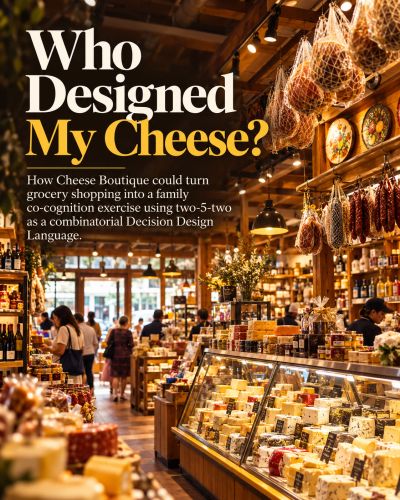
A grocery list is more than a list. It is a family decision shaped by nutrition, cost, preferences, reuse, and waste.
Using two-5-two, the family co cognized with ChatGPT to design two weeks of school lunches first, then brought in fortinos.ca prices and promotions to optimize the shopping list without letting sales drive the decision. The result was a practical system that balanced health, convenience, cost, and food waste: buy with purpose, reuse what is prepared, and adjust based on what the children actually eat.
Here is the how the family Designed their Decision:
“Use two-5-two.world as the Decision Design Language to co-cognize with me, and fortinos.ca as a resource to design a back-to-school lunch menu for my kids.”
Real estate has traditionally focused on property: land, square footage, location, construction, financing, and resale. Decision Design takes it further by empowering clients to imagine the life they want first, then shape the property around that life.
With AI and Decision Design, a client can explore how they want to live, work, host, rest, grow, and change over time before locking into a floor plan or a purchase. That changes the business from selling finished spaces to helping people design better decisions about space.
The next level of real estate may not be about offering more property. It may be about helping people create a life by design, and allowing the property to follow.
AI will transform family life not when everyone learns to prompt it, but when families learn to design decisions with it. With two-5-two as a shared Decision Design Language, parents, children, experience, experts, and AI can co cognize around everyday decisions such as food, money, school, travel, and family life.
The grocery store may be a small place to begin, but the real opportunity is learning to design the decisions that shape life together.
Click here to continue reading...